Every MaxLase system uses a pulsed Nd:YAG laser at 1064nm — small, powerful welders capable of penetrating up to 2mm on even your most demanding metals.
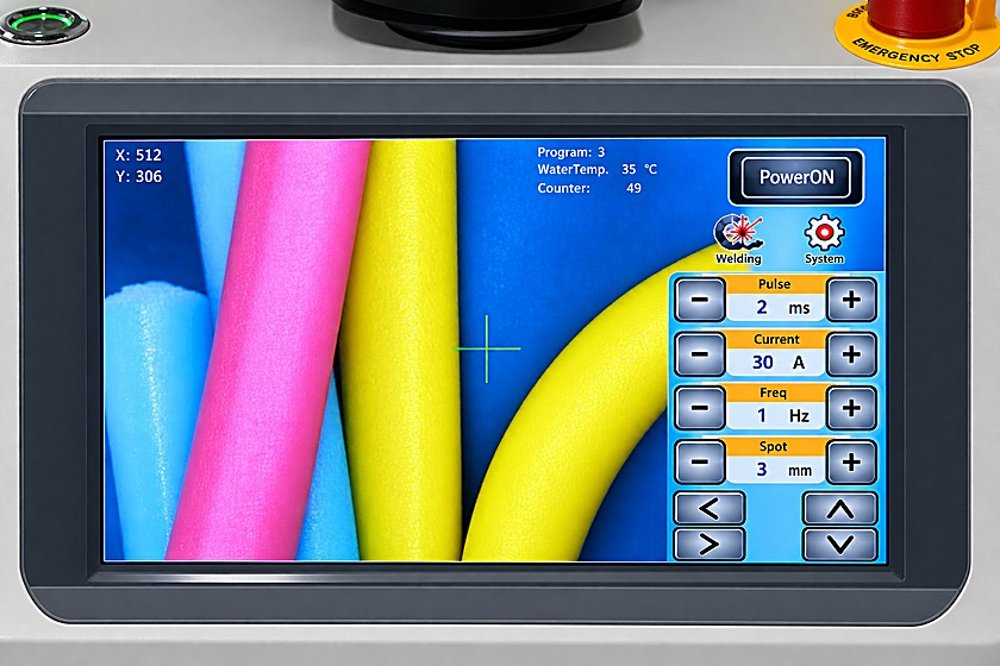
Pulsed Nd:YAG delivers energy in short, controlled bursts rather than a continuous beam. That means you control pulse width, frequency, and current independently — dialing in exactly how much heat goes into the part, for exactly how long. For thin gauges, small parts, and heat-sensitive assemblies (stones, electronics, dissimilar metals), that control matters more than raw power.
MaxLase systems range from 100W to 230W average power — small, benchtop-friendly footprints that still deliver the peak power to weld cleanly on demanding materials, with no need for industrial safety infrastructure, dedicated power service, or a specialized facility.
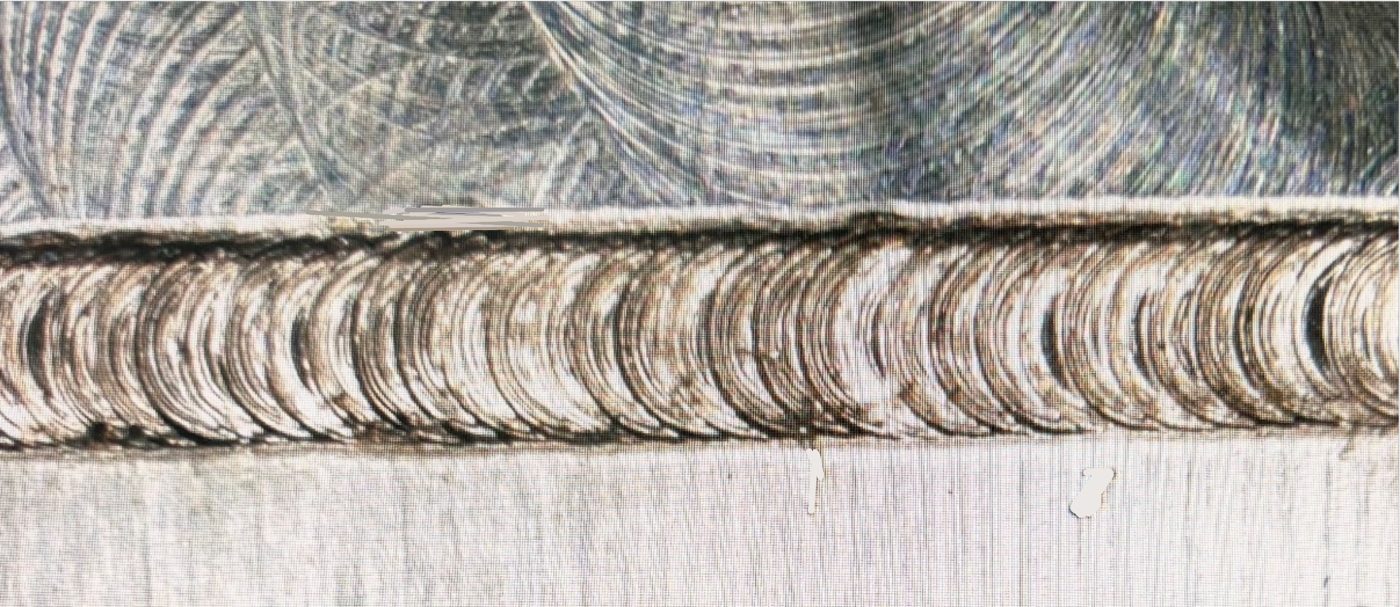
Fiber lasers have real advantages at high power, and they're a fine choice for a lot of industrial work. But for the materials jewelers and small-parts manufacturers actually weld — gold, aluminum, copper, silver, platinum — reflectivity is the problem, not raw power.
Those metals reflect a large share of a laser beam at the wavelengths fiber lasers use, so getting a clean weld often means throwing more average power at the part. Pulsed Nd:YAG solves this differently: it delivers very high peak power in a short pulse, which is what actually punches through the reflectivity of these metals and couples energy into the part — without needing hundreds of watts of average power to do it. That's why a 100–230W Nd:YAG system can outperform a much higher-powered fiber laser on a gold ring or a silver setting.
| Pulse width | How long each pulse fires (milliseconds). Longer pulses put more total energy into the part; shorter pulses limit heat spread. |
|---|---|
| Frequency | How many pulses per second (Hz). Higher frequency means faster travel speed along a seam. |
| Current | Drives peak pulse power — directly affects penetration depth. |
| Spot size | The focused beam diameter at the work surface — from as small as 0.2mm for fine detail up to 3mm for broader tacking. |
Every material welds differently. Our application guidance and starting parameters for stainless steel, 18K gold, 925 silver, red copper, and aluminum are published on each product page — always confirm on scrap before running a production part.
Penetration depth varies by material, thickness, joint geometry, and surface condition — there's no single number that applies across every application. As a general guide, MaxLase systems are built for spot welding, tacking, and seam penetration up to roughly 2mm on suitable materials and joint designs. Send us your specific part and material and we'll tell you what to expect.
We'll walk you through starting settings for your material and part geometry.